Class 3 Icse Maths Worksheets
When it comes to providing quality education, having the right teaching materials can make all the difference. Class 3 Icse Maths Worksheets are an invaluable resource for teachers looking to enhance their students’ understanding of mathematical concepts. These worksheets are specifically designed to align with the curriculum and provide practice in various areas such as addition, subtraction, multiplication, division, and basic geometry. In this article, we’ll explore the layout, sections, and practical applications of these worksheets to help you implement them effectively in your classroom.
Understanding the Structure of Class 3 Icse Maths Worksheets
Each Class 3 Icse Maths Worksheet typically comprises several key sections that facilitate a structured learning experience. Understanding how these sections work can help you utilize them more effectively.
- Title and Grade Level: Each worksheet starts with a clear title indicating the topic, along with the grade level. This helps in quickly identifying the worksheet’s focus. For instance, you might find worksheets titled “Addition and Subtraction of Two-Digit Numbers” specifically for Class 3 students.
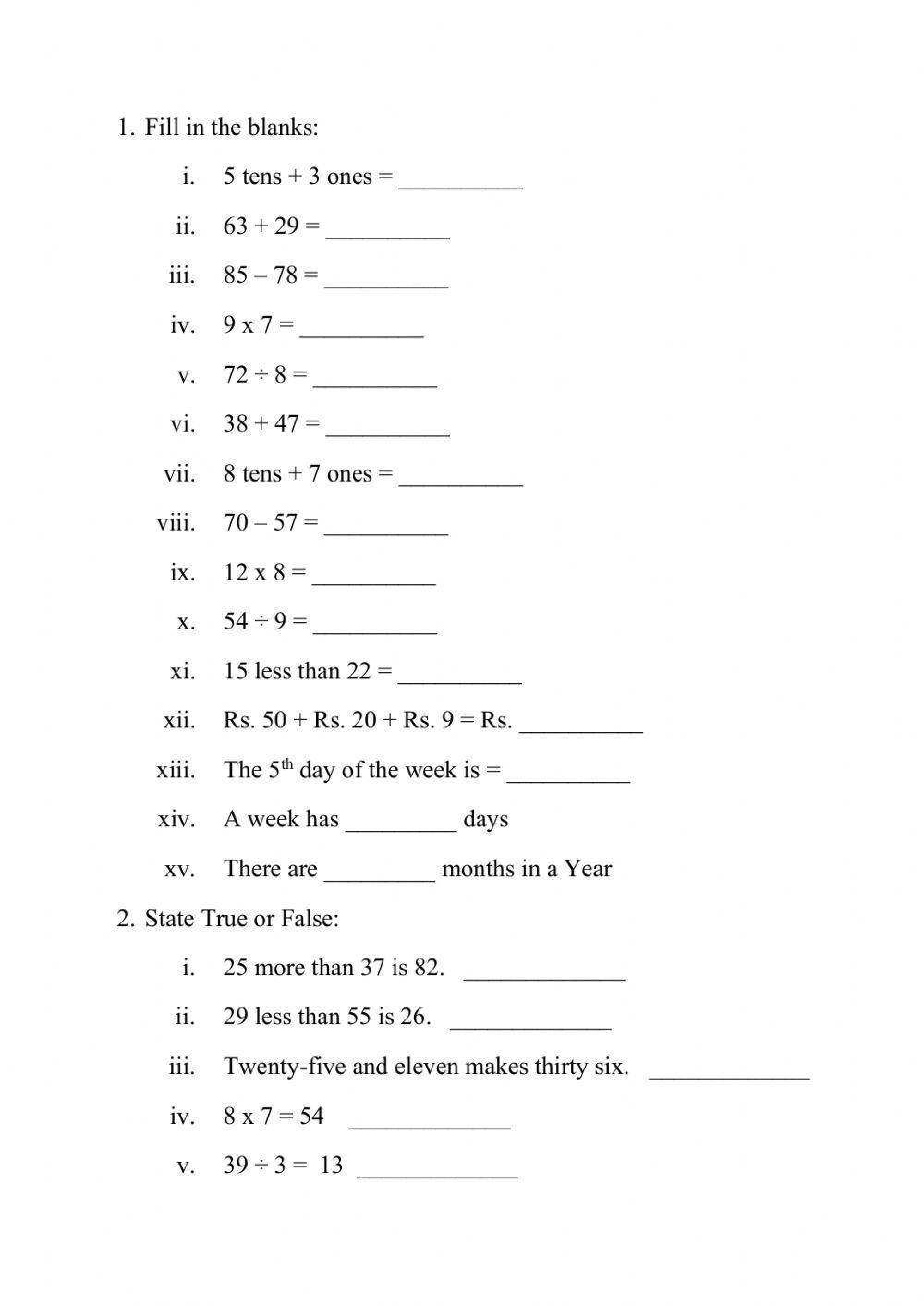
- Instructions: Following the title, clear instructions guide students on what to do. This section might include prompts like “Solve the following problems” or “Fill in the blanks.” Clear guidance ensures that students understand the task at hand without confusion.
- Questions and Exercises: The core of the worksheet consists of various types of questions, ranging from simple calculations to word problems. This section is designed to challenge students and reinforce their understanding of the concepts being taught.
- Visual Aids: Many worksheets incorporate visual elements such as graphs, charts, or images. These aids help to illustrate mathematical concepts, making it easier for students to grasp them. For example, a worksheet on geometry might include shapes that students need to identify or color.
- Space for Answers: Adequate space is provided for students to write their answers, which can be crucial for younger students who may need more room for calculations. This design choice encourages neatness and organization in their work.
- Review Section: Some worksheets may also include a brief review section at the end. This might consist of summary questions or a mini-quiz to assess comprehension.
Practical Applications of Class 3 Icse Maths Worksheets
Using Class 3 Icse Maths Worksheets in your teaching routine can significantly enhance students’ learning experience. Here’s how you can integrate them into your lessons effectively:
- Daily Warm-Ups: Start each math class with a worksheet as a warm-up activity. This reinforces previous lessons and prepares students for new material. For example, you could use a worksheet focused on addition to refresh their skills before moving on to subtraction.
- Homework Assignments: Assign worksheets as homework to give students additional practice. This reinforces learning at home and encourages parents to engage with their child’s education. Choose worksheets that align with what was covered in class to ensure continuity.
- Assessments: Utilize worksheets as informal assessments to gauge student understanding. After teaching a new concept, a quick worksheet can help identify areas where students may need more support.
- Group Activities: Turn worksheet completion into a collaborative group activity. Divide students into small groups and let them work together to solve the problems. This fosters teamwork and allows students to learn from one another.
- Supplementary Resources: Use worksheets as supplementary resources alongside textbooks and other materials. They can provide a different approach to the same topic, catering to various learning styles.
Tips for Printing and Distributing Worksheets
When it comes to printing Class 3 Icse Maths Worksheets, a few practical tips can make the process smoother and more effective:
- Paper Size: Most worksheets are designed for A4 or letter-sized paper. Ensure that your printer settings are adjusted accordingly to avoid any formatting issues.
- Printer Type: Inkjet printers work well for color worksheets, especially those with visual aids. If using black-and-white worksheets, laser printers can be more cost-effective.
- Quality of Paper: For durability, consider printing on cardstock, especially if the worksheets will be reused. This prevents tearing and makes them easier to handle.
- Lamination: If you plan to use worksheets multiple times, laminating them can be a great option. This allows students to use dry-erase markers for practice and easily wipe them clean after use.
- Digital Copies: If possible, provide digital copies of the worksheets for students who may want to practice at home using tablets or computers. This flexibility can enhance their learning experience.
Engaging Students With Interactive Elements
One of the best ways to make learning enjoyable is by incorporating interactive elements into the Class 3 Icse Maths Worksheets. Here are some creative ideas:
- Coloring Activities: Include coloring sections where students can color shapes or numbers. This not only reinforces learning but also adds a fun element to the worksheets.
- Puzzle Formats: Introduce puzzles or riddles within the worksheets. For example, math problems can be presented in the form of a treasure hunt where students solve problems to find the next clue.
- Games: Consider turning some worksheet exercises into games. For instance, create a bingo game using addition or multiplication problems where students mark off answers as they’re called out.
- Real-Life Applications: Design worksheets that incorporate real-life scenarios. For example, use examples like shopping or cooking to teach fractions and measurements, making the math relatable and practical.
- Feedback Section: Include a space for students to reflect on what they learned from each worksheet. Encouraging self-assessment helps them become more aware of their learning process.
Incorporating Class 3 Icse Maths Worksheets into your teaching toolkit can significantly enhance your students’ learning experience. By understanding their structure and practical applications, you can create a dynamic learning environment that fosters engagement and mastery of essential math skills. Remember to keep things interactive and fun, ensuring that students not only learn but enjoy the process of mastering mathematics concepts. One useful detail to keep in mind is that many worksheets come in PDF format, which avoids reformatting issues that can sometimes arise with image files, ensuring that they print as intended every time.


